


For about 500 pupils at Makarantar Allo in Sokoto South, going to school once meant learning without access to a toilet. In Rudu-Gero village, residents had to walk long distances to fetch water from dug wells.
These everyday struggles came into sharper focus when I joined a team to inspect projects implemented by Action Against Hunger under the RECAP Consortium in Sokoto State. From school toilets and solar-powered boreholes to medical outreach and psychosocial support, the visit showed how targeted humanitarian interventions can make a real difference in people’s lives.
Giving pupils a cleaner, safer learning environment
Our first stop was Makarantar Allo, along Dallatu Road in Sokoto South Local Government Area. The traditional Qur’anic school has served generations of pupils over the past 30 years, but it lacked toilet facilities until Action Against Hunger stepped in to provide latrines.
With about 500 pupils, the absence of toilets exposed children and the surrounding community to the health risks associated with open defecation and the use of drainage channels.
For the school’s proprietor, Malam Kabiru Makiyayi, the new facilities brought relief and hope. He expressed gratitude for the intervention and prayed for those who made it possible.
His reaction reminded me that providing a toilet is about more than constructing a facility. It is also about protecting children’s health, preserving their dignity and creating a better environment for learning.
During our visit, work was still ongoing to provide water for the toilets. Completing this essential component will help ensure that the facilities can be used hygienically and maintained over time.
Rudu-Gero residents get relief from water shortages
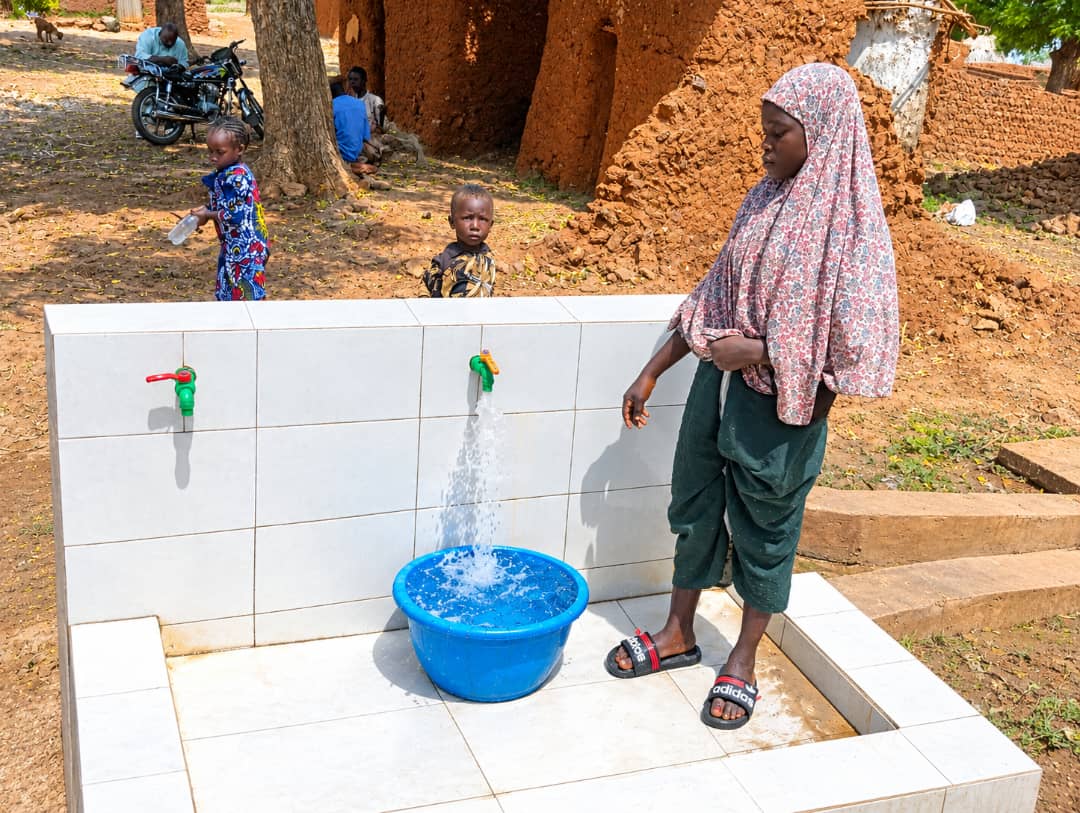
In Rudu-Gero village, Dange-Shuni Local Government Area, we inspected a solar-powered borehole with a storage capacity of 20,000 litres, provided by Action Against Hunger.
For residents who previously travelled long distances to fetch water from dug wells, the facility offers a more accessible source for household needs and livestock.
Malam Lawali Barade, a resident, told us that the borehole was already making a positive difference to the community and its animals.
Listening to him brought the value of the project into perspective. For many households, access to water means less time spent searching for a basic necessity and more time available for other daily activities.
The intervention is not an isolated effort. Action Against Hunger has provided a similar facility in Wamakko Local Government Area, while plans are underway to establish another solar-powered borehole in Bangi village, Bodinga Local Government Area.
Bringing healthcare closer to vulnerable families
Access to healthcare was another important part of the inspection.
Action Against Hunger operates a mobile outreach programme across the 10 local government areas where it works in Sokoto State. Through collaboration with existing healthcare facilities, the programme provides medicines and supports families with healthcare needs.
For vulnerable households, the cost and distance involved in obtaining medicines and medical attention can become significant barriers. Taking assistance closer to communities helps ease some of these difficulties while complementing the consortium’s investments in water and sanitation.
The programme highlights an important aspect of humanitarian work: improving lives requires more than physical infrastructure. People must also be able to access essential healthcare when they need it.
At Gagi, support for emotional and psychological wellbeing
Our visit also took us to Gagi in Sokoto South Local Government Area, where Action Against Hunger provides psychosocial support through a safe space.
Zulkiflu Shehu Yabo, a psychosocial worker at the facility, said 154 people had been registered and were benefiting from its services.
According to him, the programme focuses on four key areas: individual and group counselling, psychological first aid, psychoeducation and gender-based violence.
These services provide support for people experiencing emotional distress and other psychological difficulties, including those affected by gender-based violence.
The visit reinforced a lesson that is sometimes overlooked in humanitarian response: not every need is visible. While a borehole or toilet can be seen and measured, emotional distress may remain hidden unless people have access to safe spaces and appropriate support.
For those facing psychological challenges, such services can provide an important opportunity to seek help and begin to cope with difficult experiences.
The people behind the projects
Beyond the facilities inspected, the visit gave me an opportunity to reflect on how easily we take basic necessities for granted until we encounter people struggling without them.
A functioning toilet, a nearby source of clean water, access to medicines and a place to receive psychosocial support may appear ordinary to some. For families who have lived without these essentials, however, their availability can ease daily burdens and improve living conditions.
As a journalist, meeting beneficiaries and listening to their experiences reminded me that development projects are not just about budgets, construction and delivery targets. They are ultimately about people and whether the interventions address the challenges they face.
Through its work under the RECAP Consortium, Action Against Hunger is contributing to efforts to meet essential needs in communities across Sokoto State.
The lasting value of these interventions will depend not only on what has been provided but also on whether the facilities remain functional, accessible and useful to the people they are intended to serve.
I left the field visit with a renewed appreciation of the importance of reporting from communities. Beyond official figures and project descriptions are human stories that deserve to be heard—stories of hardship, relief and the difference that access to basic services can make in everyday life.
