


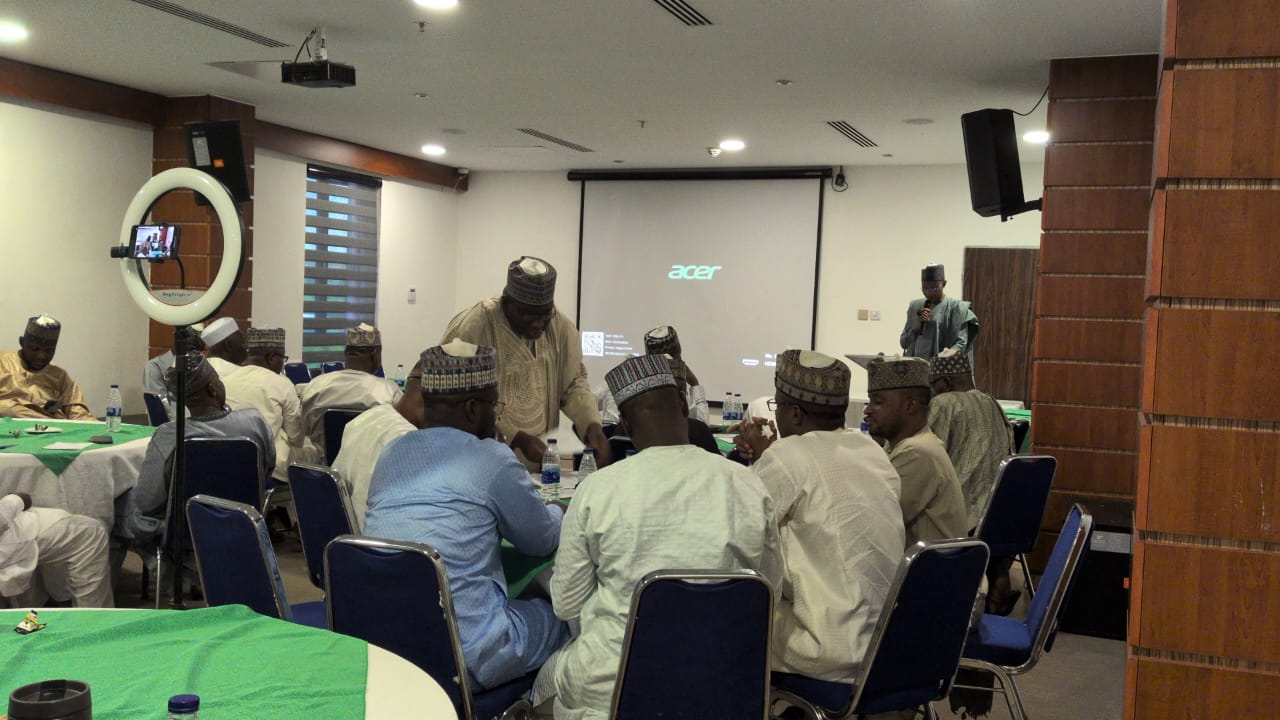
The Sokoto State House of Assembly has pledged to fast-track the passage of the proposed Social Protection Bill and intensify scrutiny of the state’s N758.7 billion 2026 budget, amid concerns over weak revenue performance and rising debt-servicing obligations.
The commitment was contained in a communiqué issued after a two-day legislative capacity-building workshop held in Abuja on November 10 and 11, 2026. The workshop was organised by the European Union through UNICEF, the International Labour Organization (ILO) and ActionAid Nigeria, and focused on budget scrutiny, fiscal discipline, digital oversight and social protection.
In the communiqué signed by Speaker Tukur Bala Bodinga, the lawmakers said they would prioritise consideration and passage of the Sokoto State Social Protection Bill once transmitted by the state government.
The proposed law is expected to establish a Social Protection Council or Agency, create a Social Protection Basket Fund and make the Sokoto Social Register mandatory for all social protection interventions in the state.
The Assembly also resolved to make budgetary provisions for expanding the National and State Social Registers to reach underserved communities. It said the move would help ensure that women, children, persons with disabilities, the elderly and other vulnerable groups benefit from government programmes.
The lawmakers expressed concern that Sokoto’s 2026 approved budget of N758.7 billion had recorded overall performance of less than 50 per cent by the end of the third quarter. The figure matches the state’s approved 2026 expenditure outlay of N758,700,526,537.89.
The communiqué identified heavy reliance on allocations from the Federation Account Allocation Committee (FAAC), weak internally generated revenue and growing debt-servicing obligations as major threats to the state’s fiscal position.
To address the challenges, the Assembly pledged to strengthen oversight of revenue-generating ministries, departments and agencies, as well as the Sokoto State Internal Revenue Service. The lawmakers said the aim was to reduce revenue leakages and ensure timely remittance of government funds.
They also resolved to review quarterly budget performance reports to track approved, released and actual expenditure, particularly on social protection programmes, and to assess the number of beneficiaries reached.
The Assembly called for realistic revenue projections, properly costed expenditure proposals and rigorous scrutiny of new borrowing to protect debt sustainability.
It further urged increased public awareness on revenue mobilisation and tax compliance, saying reduced dependence on FAAC would strengthen the state’s capacity to finance healthcare, education and social protection.
The 2026 budget, signed into law by Governor Ahmed Aliyu in January, was presented as the “Budget of Socio-Economic Expansion,” with 41 per cent allocated to the economic sector, 37 per cent to the social sector and 16 per cent to health.
Participants commended Governor Aliyu and the leadership of the State House of Assembly for their commitment to social protection reforms. They also acknowledged the European Union, UNICEF, ILO and ActionAid Nigeria for technical and financial support.
The communiqué reaffirmed the lawmakers’ commitment to using their constitutional responsibilities of lawmaking, budget approval and oversight to promote accountability and build a resilient social protection system that leaves no one behind in Sokoto State.
The latest pledge builds on earlier collaboration between the Assembly and development partners. In October, the EU, UNICEF and ILO commended the state government’s social protection efforts and urged the legislature to deepen oversight of budget implementation.
