


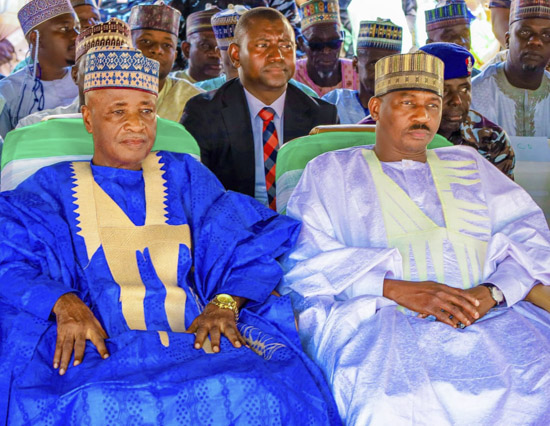
Sokoto State’s political landscape has evolved through experience, political structures, strategic alliances, grassroots mobilisation, and the influence of established political figures. Within this political setting, the relationship between Governor Ahmed Aliyu and his political mentor, Senator Aliyu Magatakarda Wamakko, stands out as an important example of loyalty, mutual respect, political understanding and shared responsibility.
At a time when political alliances are increasingly tested by personal ambitions, competing interests and changing political calculations, Governor Ahmed Aliyu has continued to demonstrate a disposition that places loyalty, respect and collective political interests at the centre of his relationship with Senator Wamakko.
This is a significant political attribute in an environment where relationships are often subjected to the pressures of power, influence and individual ambition.
Indeed, loyalty in politics is not established merely through public declarations or occasional expressions of solidarity. It is demonstrated through consistency, mutual confidence, respect for established relationships and the willingness to remain committed to shared objectives, even when circumstances become challenging. Political partnerships built on these enduring values are more likely to withstand the pressures of time than those sustained solely by temporary electoral calculations.
The relationship between Senator Wamakko and Governor Ahmed Aliyu is best understood within the context of political mentorship and continuity. Senator Wamakko, a former Governor of Sokoto State and serving senator, has accumulated decades of political experience and institutional knowledge. His political journey, influence and understanding of governance and party organisation have made him one of the most prominent figures in Sokoto State politics.
Governor Ahmed Aliyu, on the other hand, represents a generation of leadership whose political development has benefited from the guidance, experience and political tutelage of established leaders. His disposition towards his political mentor reflects an appreciation of the importance of experience, institutional memory and the contributions of those who played significant roles in shaping his political journey.
Rather than allowing the dynamics of political office to create unnecessary distance or rivalry, Governor Aliyu has demonstrated the importance of maintaining a relationship founded on recognition, mutual understanding and respect. This is particularly important in Nigerian politics, where the assumption of executive power can sometimes create tensions between political mentors and their protégés. The ability to manage such relationships with maturity indicates political understanding and emotional intelligence.
Beyond the personal relationship between the two leaders, the Aliyu-Wamakko partnership has significant implications for the stability and cohesion of the All Progressives Congress (APC) in Sokoto State. Political parties are strongest when their leaders can harmonise their interests, accommodate different tendencies and provide a common direction for members and supporters.
Where political experience and executive authority complement each other, the party benefits from a combination of institutional knowledge, political influence and administrative capacity. In this regard, Senator Wamakko’s experience and Governor Aliyu’s executive responsibilities can serve complementary purposes in strengthening the party’s structures and advancing its political objectives.
The mentor provides political experience and guidance, while the mentee brings executive responsibility, fresh energy and the capacity to translate shared political aspirations into practical action. Such a relationship, when properly managed, can promote internal discipline, strengthen confidence among party stakeholders and encourage greater participation at the grassroots.
It also sends an important message to younger politicians that loyalty to those who contributed to one’s political development should not be mistaken for weakness. Rather, it is a virtue that promotes trust, continuity and enduring political relationships.
The importance of the Aliyu-Wamakko partnership has become even more evident as the APC prepares for the 2027 general elections. In November 2026, Senator Wamakko was appointed chairman of the APC’s 37-member State Campaign Council, while Governor Ahmed Aliyu was named deputy chairman. The arrangement brings together two influential political figures whose respective experience, positions and contributions could prove important to the party’s electoral preparations.
It also offers a practical illustration of how political mentorship and executive leadership can complement each other in pursuit of a common objective. The symbolism of the arrangement is noteworthy: an experienced political leader providing direction while the sitting governor stands alongside him in advancing the party’s electoral interests.
Beyond the appointments themselves, the composition of the campaign council presents an opportunity to bring together established political leaders, elected officials, party executives and grassroots stakeholders under a coordinated structure. The success of such an arrangement, however, will depend not merely on the positions individuals occupy but also on their willingness to work together, reconcile differences and mobilise support across the state’s political constituencies.
As the 2027 elections draw closer, the APC will need more than political prominence to consolidate its position. It will require effective organisation, credible leadership, grassroots engagement and sustained confidence among party members. The ability of Governor Aliyu and Senator Wamakko to maintain their political understanding will therefore remain an important factor in the party’s preparations.
The importance of their relationship should not, however, be measured exclusively by electoral considerations. A harmonious political environment can also contribute to the broader atmosphere within which government policies and development programmes are implemented. Although governance must ultimately be judged by performance, accountability and tangible improvements in citizens’ lives, political stability and constructive relationships among influential stakeholders can provide a supportive environment for effective administration.
A united political structure can also improve communication between government and party supporters, strengthen public engagement and create opportunities for collective problem-solving. For Governor Ahmed Aliyu, maintaining a cordial relationship with Senator Wamakko reflects an understanding that political success is not necessarily a solitary achievement. It often depends on cooperation, institutional relationships and the ability to sustain confidence among those who share common aspirations.
Similarly, Senator Wamakko’s continued political relevance provides an avenue through which experience and institutional knowledge can contribute to the development of the party and the state’s political landscape. Ultimately, the greatest value of political mentorship lies not simply in preserving personal loyalty but in translating experience, guidance and cooperation into positive outcomes for the people.
As Sokoto State approaches another electoral cycle, the Aliyu-Wamakko relationship offers an important lesson about the place of loyalty, political maturity and continuity in democratic politics. Political ambitions are legitimate, and differences of opinion are inevitable in a competitive political environment. However, the ability to manage such differences without destroying established relationships is a mark of maturity and responsible leadership.
The partnership between Governor Ahmed Aliyu and Senator Aliyu Magatakarda Wamakko demonstrates the potential benefits of combining political experience with executive leadership, mentorship with responsibility, and institutional influence with grassroots engagement. More importantly, it reinforces the idea that political relationships should be built on mutual confidence and shared objectives rather than convenience and temporary interests.
For the APC in Sokoto State, sustaining this understanding could provide an important foundation for internal cohesion and effective electoral mobilisation ahead of 2027. Beyond the calculations of party politics, however, the enduring lesson is that leadership is not only about occupying positions of authority. It is also about recognising contributions, respecting relationships, embracing guidance and understanding the value of those who helped shape one’s journey.
In a political environment frequently characterised by shifting alliances and competing ambitions, Governor Ahmed Aliyu’s relationship with Senator Wamakko underscores the enduring importance of loyalty, mutual respect and collective responsibility.
Indeed, political power may elevate individuals, but loyalty, trust and the wisdom to sustain meaningful relationships are what give political partnerships their lasting strength.
