


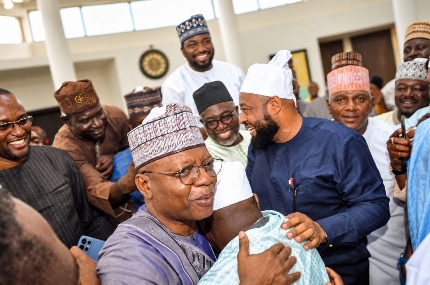
A photograph can sometimes tell a story beyond what the eyes can immediately see. It can capture laughter, friendship, togetherness and a moment when political differences seem to fade away. But it can also raise difficult questions about the journey from unity to division.
Looking at this picture, one may be compelled to ask: Where did we miss the steps?
There was a time when political relationships went beyond party meetings, campaign activities and the pursuit of positions. People shared meals, celebrated together, stood by one another during difficult moments and worked collectively toward common goals. Through trust, sacrifice and determination, they achieved victories that many had considered impossible.
But as political seasons changed, so did some relationships.
What happened along the way? Was it ambition, misunderstanding, competition, ego or the absence of sincere communication? Perhaps it was a combination of several factors. Whatever the reason, the consequences of broken relationships are often felt long after political contests have ended.
Politics naturally produces different interests and opinions. People compete for positions, influence and recognition. Such competition is not necessarily harmful. Healthy competition can even encourage better ideas and stronger representation. However, when personal ambition becomes more important than human relationships, disagreements can easily turn into resentment, bitterness and lasting division.
This is why dialogue remains important.
Dialogue does not weaken leadership, and reconciliation does not diminish anyone’s dignity. Rather, the willingness to listen, acknowledge mistakes and create room for understanding can demonstrate maturity, courage and strength of character.
Sometimes, people do not need another argument. They need an opportunity to speak honestly, to be heard and to find a way forward. A sincere conversation may not erase every disagreement, but it can reduce tension and restore the respect that once existed.
Political leaders and followers must also remember that not every relationship is built around appointments, contracts or personal benefits. Some relationships are founded on genuine friendship, shared experiences, personal loyalty, business partnerships, political commitment and simple human affection.
These bonds should not always be measured by what someone stands to gain.
Power is temporary. Political offices change hands. Positions come and go, while political seasons eventually pass. But life continues beyond politics.
Those we celebrate today may be the people we meet tomorrow outside the political arena. Those we disagree with today may still remain our neighbours, friends, relatives, colleagues or partners in community development. The hands we refuse to shake today may be the same hands we need to hold tomorrow.
For this reason, political disagreement should not automatically become personal hostility.
It is possible to compete without hatred, disagree without disrespect and pursue different political interests without destroying relationships. It is also possible to support a cause while recognising the humanity of those who hold different opinions.
The lesson from this picture may therefore be greater than the unity it captures. It may remind us that unity is built by human beings, and human beings have the capacity to repair what has been damaged.
Where there is misunderstanding, let there be conversation. Where there is resentment, let there be sincere efforts toward reconciliation. Where relationships have suffered, let humility create a path for healing.
Reconciliation does not mean that everyone must agree on every issue. It means recognising that differences should not destroy our shared humanity. It means placing the future above temporary disagreements and choosing peace where unnecessary hostility has taken root.
Ego may win an argument today, but it can destroy a relationship that could have remained valuable for many years. Dialogue may require humility, but it can preserve trust, dignity and the possibility of a better tomorrow.
As we navigate the complexities of politics, let us not become so consumed by power that we forget the humanity that brought us together in the first place.
We may disagree on politics. We may compete for influence. We may walk different paths. But we should never allow political differences to erase the respect, friendship and human connection that once united us.
After politics, there is another life.
Note
This article is an independent reflection on political relationships, unity, dialogue and reconciliation. It is not intended to target, accuse or disparage any individual, group or political interest. The views expressed are those of the author and are presented to encourage mature political engagement, mutual respect and peaceful coexistence beyond political contests.
Acknowledgement and credit
This article was inspired by the original reflection titled “Where Did We Miss the Steps?” written by Comrade Shehu Bawa Bwari II. I sincerely acknowledge his thoughtful perspective on political relationships, reconciliation, humility and the enduring importance of humanity beyond politics. The present article is an independent editorial reflection developed from those ideas.
About the author
Abubakar el-Kurebe is a Librarian and Information Scientist, writer, and media/public communications practitioner. He serves as an Information Officer with the Shiroro Local Government Council, Niger State, and is actively involved in community development, civic engagement and public affairs communication. His writings focus on governance, leadership, community development, youth empowerment and social issues.
Contact: sadeequllah19@gmail.com
