


When politicians come asking for votes, they usually come with promises. They promise roads. They promise jobs. They promise better representation. They promise to speak for the people in Abuja and bring government closer to their communities.
But before listening to all the promises, voters should ask a more fundamental question:
What has this person done before?
That question is particularly important as the people of Illela/Gwadabawa Federal Constituency in Sokoto State prepare to choose their representative in the National Assembly (NASS).
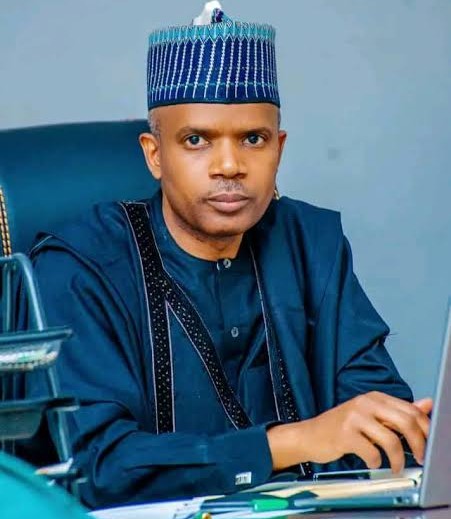
Among those seeking the mandate is Dr. Abubakar Mohammed Zayyana, the All Progressives Congress (APC) candidate.
For Zayyana, the case is not built entirely around what he says he will do if elected. He has already had an opportunity to serve in government as Commissioner for Budget and Economic Planning in Sokoto State.
That experience provides voters with something invaluable in politics: a record to examine.
A job that requires more than a title
Budgeting is not simply about putting figures on paper. A budget reflects government priorities and determines where scarce public resources are directed.
For a commissioner responsible for budget and economic planning, the job therefore requires more than administrative routine. It involves understanding government priorities, coordinating institutions, tracking performance and connecting plans and expenditure to the needs of citizens.
Zayyana’s tenure offers an example of that approach.
In January 2025, he unveiled a roadmap for the ministry designed to track the activities, timelines, costs and potential risks associated with government programmes. The framework was also intended to improve accountability by making departments more conscious of their responsibilities and deliverables.
Under his leadership, the ministry was involved in developing the State Development Plan, the 9-Point SMART Innovative Agenda and the Multidimensional Poverty Index, while also working with development partners to strengthen evidence-based planning.
The significance goes beyond the technical language of government documents.
The underlying principle is simple: government should be able to measure what it does.
That is an important principle for anyone aspiring to participate in legislation and oversight at the federal level.
Zayyana, more than a public administrator
There is another dimension of Zayyana’s background that deserves consideration.
His professional and academic profile extends into law, finance and research. His profile identifies him as a lecturer at the University of Bedfordshire in the United Kingdom, with law and finance among his areas of expertise and research methodology among his skills.
That combination is relevant to legislative work.
The National Assembly makes laws, considers public finances, appropriates resources and exercises oversight over government institutions. An understanding of finance and public administration, combined with research and legal knowledge, can provide useful tools for examining policies and public expenditure.
None of this automatically makes a person a good legislator. But it does provide a foundation.
And when voters are comparing candidates, preparation and experience should form part of the conversation.
What Illela/Gwadabawa needs
For many constituents, the National Assembly can appear distant — politicians gather in Abuja while people at home continue to deal with everyday challenges.
Yet decisions taken in Abuja have consequences in Illela and Gwadabawa.
Federal budgets determine spending priorities. Laws shape economic activity. Oversight affects how public institutions are held accountable. And effective representation can ensure that the concerns of communities are consistently brought before the federal government.
This means representation requires more than occupying a seat or attending plenary sessions.
It requires understanding how government works, knowing where decisions are made and having the capacity to make a convincing case for one’s constituents.
Zayyana’s previous experience is relevant here because he has already worked within that machinery.
He has managed a government ministry, participated in development planning and worked around budgeting and performance frameworks. His academic background adds another layer of preparation.
Zayyana is therefore not presenting himself as someone entirely new to public responsibility.
But the record must still be scrutinised
Experience should not be confused with entitlement.
Zayyana’s previous public service does not mean voters owe him their votes. His record should be examined just as the records of other candidates should be examined.
What did Zayyana accomplish?
What did he improve?
What did he learn?
And can the experience gained at the state level translate into effective representation at the federal level?
These are fair questions.
His supporters can point to efforts to make planning more systematic and measurable, including the use of data to understand poverty and development needs. The state’s Multidimensional Poverty Index was developed as a tool to inform policy and resource allocation.
His successor, Dr. Bashir Muhammad Achida, also acknowledged Zayyana’s contribution to the development of the 9-Point SMART Innovative Agenda, the MPI and the coordination of development partners.
Such acknowledgements do not place his record beyond criticism. Rather, they give voters something concrete to consider when assessing his candidacy.
From Sokoto’s budget ministry to the National Assembly
There is a practical connection between Zayyana’s previous assignment and some of the responsibilities of a federal lawmaker.
At the state Ministry of Budget and Economic Planning, he worked within the process through which government plans are translated into financial and development priorities.
At the National Assembly, a representative participates in legislation, appropriation and oversight.
The experience does not guarantee that Zayyana will succeed as a legislator. Politics and public administration are not identical professions.
But familiarity with budgets, public expenditure, planning and government institutions can be an advantage when a lawmaker is examining how public resources are allocated and whether government programmes are delivering what they promise.
That is particularly important at a time when citizens increasingly demand accountability for public spending.
The human side of representation
Ultimately, however, politics is not about budgets and policy documents alone.
Behind every budget figure is a family hoping for better healthcare. Behind every infrastructure allocation is a community waiting for development. Behind every economic policy are young people looking for opportunities and farmers trying to make a living.
The people of Illela and Gwadabawa do not need a representative who merely understands government on paper.
They need someone who can connect government decisions to the realities of the people.
Someone who can take the concerns of a farmer, a trader, a student, a civil servant or a young unemployed person and carry them into the rooms where decisions are made.
That is ultimately what representation should mean.
Tested before the ballot
There is a useful principle when choosing people for responsibility: look at how they handled responsibility when they had it before.
That is the central argument in Zayyana’s case.
He has already been entrusted with public office. He has managed a ministry responsible for budget and economic planning. His tenure involved efforts around development planning, performance tracking and data-driven approaches to policy.
He also brings an academic background spanning law, finance and research.
None of these things makes him automatically entitled to represent Illela/Gwadabawa.
But they mean that voters have more than campaign rhetoric on which to base their assessment.
They can look at the record.
They can consider the experience.
They can examine the person.
And then they can decide.
For Illela/Gwadabawa, the 2027 election should therefore be about more than who can make the most attractive promises. It should also be about who has demonstrated the capacity to handle responsibility and who can convert that experience into meaningful representation.
Zayyana is asking for a new mandate, but his story does not begin with the campaign.
He has been tested before the ballot.
Now, it is for the people of Illela/Gwadabawa to decide whether that experience is enough to earn their confidence — and their mandate to serve in the National Assembly.
